
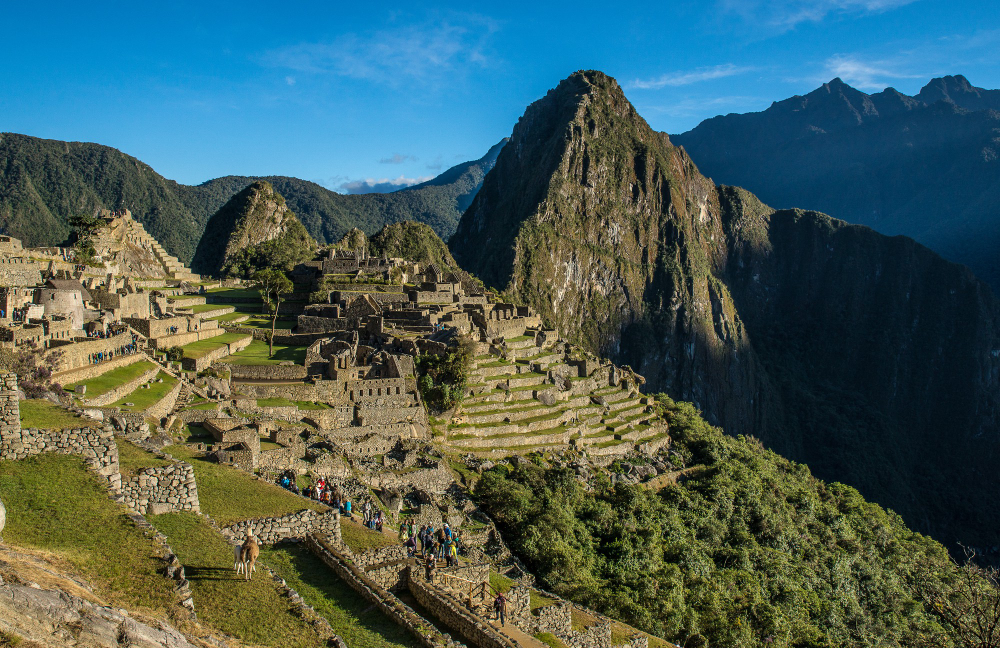
Machu Picchu now requires a timed entry slot, a guide, a specific circuit through the site depending on which ticket you purchased, and a booking made weeks or months in advance. The Inca Trail — the four-day hike through cloud forest and mountain passes that is the classic approach — has a permit system capped at 500 people per day that sells out months ahead. The train from Cusco to Aguas Calientes, the town at the base of the mountain, costs considerably more than logic suggests a two-hour train through the Andes should cost. All of this is the price of visiting one of the most extraordinary archaeological sites on earth, and it is worth every bureaucratic inconvenience, every early alarm, every administrative hoop — because the place, when you are finally standing inside it, is genuinely and completely unlike anything you have stood inside before.
Cusco: The City That Makes the Journey Worth Starting
Most people treat Cusco as a staging post for Machu Picchu. This misreads one of the most historically layered cities in the Americas. Cusco was the capital of the Inca Empire — Tawantinsuyu, the empire of four quarters — and at its 15th-century height one of the largest cities in the world. The Spanish arrived in 1533, destroyed most of what they found, and built directly on top of Inca foundations so precisely engineered that Spanish walls kept falling in earthquakes while the Inca stonework beneath survived intact. Walk the San Blas neighbourhood and you walk on stones that have not shifted in five hundred years of earthquakes. The Spanish architecture above them is considerably less reliable.
Spend at least three days in Cusco before going anywhere else. Not only for the altitude — which at 3,400 metres will humble the fittest traveller — but because the city deserves the time. The Sacred Valley, the salt pans of Maras, the circular Inca terraces of Moray, the market at Pisac — these are independently extraordinary and render Machu Picchu the culmination of a region rather than a single extracted experience.

Machu Picchu: What No One Tells You Before You Get There
The site opens at 6am. The first hour — before the full weight of the day’s visitors has arrived, when the mist is still sitting in the valley below the citadel and the llamas are grazing on the terraces with a nonchalance that suggests they have not been informed they are in a UNESCO World Heritage Site — is the hour the place was designed to be experienced in. The architecture is oriented to the sunrise. The light at 6am does what it was intended to do. By 9am, the circuit is busy. By 11am, it is crowded. The site is still magnificent at 11am. It is transcendent at 6am. Book the first entry slot. Set the alarm. This is the most important practical advice available for Machu Picchu and it costs nothing.
150 stone buildings on a ridge between two peaks at 2,430 metres, connected by 3,000 stone steps, built without the wheel, iron tools, or mortar — by a civilisation that fitted stones so precisely that a knife blade cannot pass between them. Stand in the Temple of the Sun. Look at the stonework. Then look at anything built in the last fifty years and notice the difference.

The Altitude: Your Body Has Opinions About This
The altitude will affect you. Not might — will. Cusco at 3,400 metres will humble the fittest traveller within hours of arrival. Headache, nausea, breathlessness — symptoms that subside after 24 to 48 hours as you acclimatise. Drink coca tea, available everywhere in Cusco, the local remedy with a centuries-long track record. Move slowly. Do not attempt the Inca Trail until your second full day. Take the first day as a gift to your cardiovascular system and spend it eating at one of Cusco’s excellent restaurants cooking with native Andean ingredients — which will make you forget you have a headache.

Peru is logistically demanding, altitudinally humbling, and worth every bit of both. The Inca built one of the great civilisations in human history on these mountains. The least you can do is take the early entry slot.
Leave a Reply