
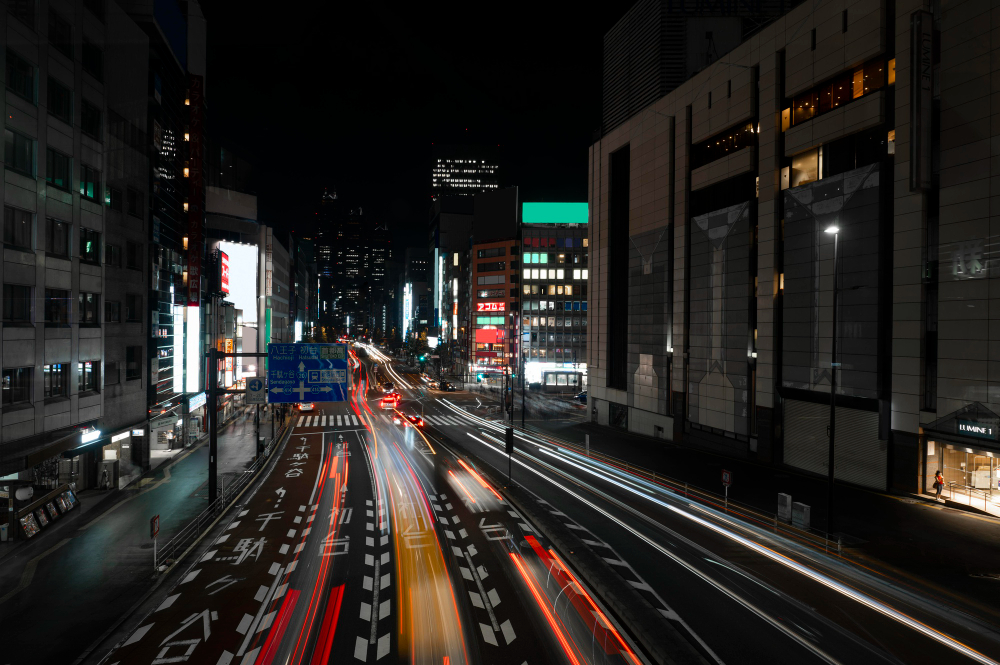
Tokyo is the world’s largest metropolitan area — approximately 37 million people — and functions with a precision that makes most other cities look assembled in a hurry by people unsure what a city was supposed to do. Trains run to the second, with public apologies for delays of sixty seconds or more. Streets are clean without visible enforcement. Food is extraordinary at every price point. The service culture operates on meticulous attention that has no English name but produces the consistent feeling of being somewhere that has thought carefully about what it means for a place to work. Tokyo is not the most beautiful city in the world. It is the most competent — and competence at this scale turns out to be spectacular.
The Neighbourhood Strategy: Tokyo Requires One
Tokyo is a city of distinct neighbourhoods connected by a train network so comprehensive that moving between them feels like teleportation. Shinjuku — built around the world’s busiest station, 3.5 million daily passengers — is the Tokyo of neon and the Memory Lane alley where yakitori restaurants have grilled chicken under the train tracks since the 1940s. Shibuya has the crossing and the youth culture. Yanaka is the old Tokyo — narrow streets, wooden temples, a cemetery doubling as a park, a shopping street of small family businesses that survived the 1923 earthquake, the 1945 bombs, and every property developer since.
Pick two or three neighbourhoods per day. Walk between the attractions within each one. Use the train between them. Do not attempt to see Tokyo as a single place because it is not one — it is thirty cities sharing a train network and an extraordinary commitment to making things work.

The Food: More Michelin Stars Than Paris and a Vending Machine on Every Corner
Tokyo has more Michelin stars than Paris, New York, or London — which is extraordinary given it is also the city where a transcendent bowl of ramen from a twelve-seat alley restaurant costs eight pounds, a convenience store onigiri at 2am outperforms most European café sandwiches, and vending machines dispense hot canned coffee on every corner. The range is not remarkable. The consistency of quality across the entire range is. Tokyo treats food seriously at every price point, and the result is a culture that produces a kaiseki meal at three hundred pounds and a standing ramen counter at eight with equal commitment to getting it right.

The Practical Reality of Being a First-Timer
Get a Suica card at the airport — a rechargeable IC card that works on every train, subway, and bus in Tokyo and also at most convenience stores. It removes the need to understand the fare system entirely, which is a significant gift to anyone arriving jet-lagged at Narita. Download Google Maps with offline Tokyo maps before you land. The train network, which appears on first encounter to be a diagram assembled by someone who enjoys puzzles, resolves into complete logical sense after about two days of use, and by day three you will be switching lines at Shinjuku station — the world’s most complex train hub, with 200 exits — with the confidence of someone who has been doing it for years.
Stay at least five nights. Tokyo is a city that takes two days to stop overwhelming you and three more to begin understanding. The first day is for recovering from the flight and locating a convenience store. Everything after that is genuinely extraordinary.

The One Thing That Will Actually Surprise You
It is the silence. Tokyo, with 37 million people, is remarkably quiet — city quiet, the specific quiet of a place where people have agreed without apparent enforcement not to make unnecessary noise in shared spaces. Trains quiet. Restaurants quiet. Streets quieter than cities a tenth the size. This civility — 37 million people operating on mutual consideration — is what visitors consistently report as the most surprising and lasting impression. No photograph or description prepares you for it. You simply arrive and notice it, and spend the rest of the trip trying to figure out how they did it.
Tokyo will work for you in ways no other city has. You will spend the entire trip trying to understand why. You will leave without fully understanding it. Go back and try again — this is also entirely normal.
Leave a Reply