
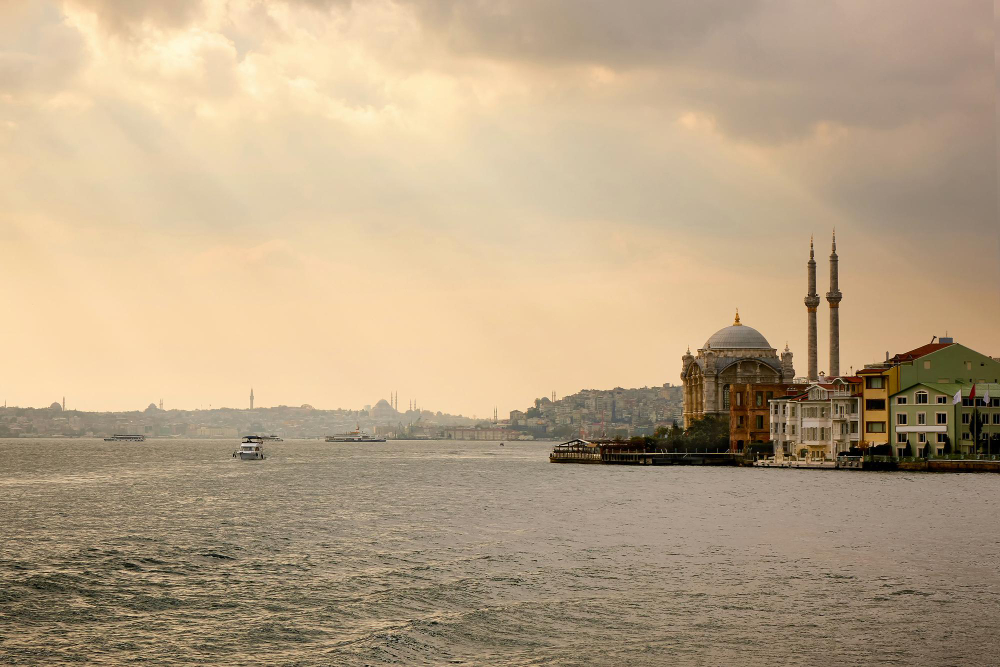
Istanbul sits on two continents — Europe on the western bank of the Bosphorus, Asia on the eastern, the strait between them running with a current so strong that the city’s relationship with the sea feels less like geography and more like a marriage. It has been the capital of the Roman, Byzantine, and Ottoman Empires in sequence — three great civilisations conducting their most ambitious building projects on the same hills, which means Istanbul carries more layers of accumulated human ambition per square metre than almost anywhere on earth. Walking through it is not sightseeing. It is archaeology in motion, conducted at street level, with the smell of simit bread and charcoal-grilled corn and Bosphorus salt air threading through everything.
Hagia Sophia: The Building That Changed Architecture
The Hagia Sophia was built in 537 AD using techniques that didn’t yet exist — its architects had to invent them while building. The dome is 55 metres high, 31 metres in diameter, and appears from inside to float — suspended on forty arched windows flooding the space with light, creating the impression, unchanged in fifteen centuries, that the dome is held up by heaven rather than physics. Christian cathedral, Ottoman mosque, secular museum, mosque again — every identity has left its mark: golden Byzantine mosaics alongside Ottoman calligraphic medallions, Christian iconography and Islamic geometry on the same walls, a layering of sacred history that makes it less a monument than a living argument about what civilisation is.

The Bosphorus: The Water That Defines Everything
Take the public ferry from Eminönü to Kadıköy — ten minutes, a few lira, Europe to Asia. Stand on deck as the city opens on both sides: the domes and minarets of Sultanahmet, the Topkapı walls, the Galata Tower on the European shore; Kadıköy’s market streets and waterfront tea houses on the Asian side, where men sit with glasses of çay and the unhurried quality of people with nowhere urgent to be. The light on the Bosphorus in the late afternoon — water turning from green to silver to something with no name, tankers moving with the current, gulls following the ferry for bread — is the Istanbul that stays in the memory long after the mosques and bazaars have compressed into a general impression of grandeur.

The Food: Eat Everything, Starting Now
Simit — the sesame-crusted bread ring from carts at every junction, eaten warm with white cheese and tea — is the breakfast Istanbul has eaten for centuries and that tastes, in the morning air above the Bosphorus, like the most sensible thing anyone has decided to eat for breakfast. Balık ekmek — grilled mackerel in a bread roll from boats moored at the Galata Bridge, fish pressed with onion and lemon, the charcoal smell carrying across the water — is the lunch that makes you understand why Istanbul’s relationship with the Bosphorus is not merely geographical. The fish comes from the strait. The bread from the same bakery street since before most countries existed. Everything is from here, and tasting it here is tasting the place.

How to Exist in Istanbul Properly
Cross the Galata Bridge on foot and stop in the middle to look in both directions — the Golden Horn to the north, the Sea of Marmara to the south. Drink tea in the Grand Bazaar at the small houses serving stallholders rather than tourists — no menus, tea in a tulip-shaped glass, costs almost nothing. Walk through Balat, the old Jewish quarter of rainbow-painted houses and börek-scented bakeries. Cross to the Asian side for dinner in Kadıköy, priced for people who live there, then take the last ferry back with the city lit on the water in the dark.
Istanbul does not reveal itself quickly. It reveals itself in layers, over days, through the accumulation of smells and sounds and the particular quality of light on water at different hours. Give it the time it is asking for. It has been here for three thousand years. It can wait. You, however, should not.
Istanbul is where three empires chose to put their best work. Standing in the middle of it, you understand why. It is, simply, one of the finest places on earth to be a human being with working senses and nowhere urgent to be.
Leave a Reply