
Brazil has the space to develop not one food culture but several — the churrasco tradition of the southern Pampas, the Afro-Brazilian cooking of Bahia, the river fish and tropical fruit culture of the Amazon, the Italian and Japanese immigrant influences of São Paulo, and the street food ecosystem of Rio de Janeiro operating at full capacity at every hour of the day and night. What ties all of these together is not a single ingredient but a shared attitude: food in Brazil is an event, not a transaction. It is the occasion around which everything else organises itself, and the appropriate response to being offered food in Brazil is to sit down, stay longer than planned, and accept second helpings without negotiation.
Feijoada: The National Dish That Requires the Whole Day
Feijoada is not a quick dinner. It is an event with a schedule. Black beans slow-cooked for hours with pork in every form — smoked sausage, dried beef, pork ribs, pig’s ear, and whatever else the kitchen has on hand — until the broth becomes dark and deeply savoury and the beans absorb every flavour in the pot. It is served with white rice, farofa (toasted manioc flour with butter, cooked until golden and slightly nutty), collard greens sautéed with garlic, orange slices to cut the richness, and a small glass of cachaça to start proceedings. Feijoada in Brazil is traditionally eaten on Wednesdays and Saturdays — the days when it appears at restaurants and family tables across the country — and the meal is designed to last from midday into the afternoon, which is exactly what happens every time.
The origin is contested — some historians trace it to the enslaved African population who received the less-desirable pork cuts and transformed them through slow cooking and ingenuity, which is both a story about necessity and culinary genius. Whatever the origin, feijoada is now eaten by everyone in Brazil, from street-corner restaurants to five-star hotels. It transcended its history by being too delicious to remain anyone’s exclusive property.

Churrasco: The Philosophy of Meat Over Fire
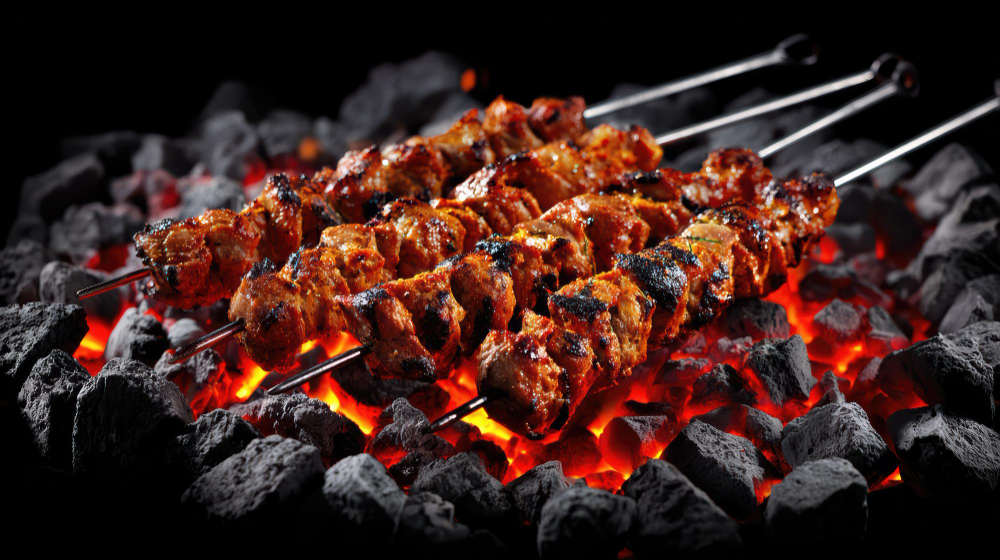
The churrasco tradition of Rio Grande do Sul is built on a single insight: a large piece of good-quality beef, cooked slowly over wood charcoal on a long skewer, needs almost nothing else. Picanha — the rump cap cut with its thick layer of fat that bastes the meat as it cooks — is the centrepiece: juicy, smoky, deeply flavoured in the way only fire and patience produce. The churrascaria — servers circulating with skewers, slicing directly onto plates until the customer flips a disc from green (keep it coming) to red (I need a moment) — is one of the finest eating formats in the world and the most honest solution to how much meat is the right amount of meat.

Pão de Queijo: The Snack Brazil Should Be More Famous For
Pão de queijo — small rolls of tapioca starch and Minas cheese, golden outside and chewy inside — are the Brazilian snack most of the world hasn’t discovered yet, and that once discovered becomes a permanent craving. From Minas Gerais, developed as a naturally gluten-free bread by a population with abundant manioc and excellent local cheese. Every Brazilian has an opinion about whose pão de queijo is best. Every Brazilian is correct that it is whoever made theirs. Eat them warm, immediately from the oven, with strong sweet coffee drunk standing at a padaria counter — which is how Brazil has been eating breakfast since before anyone was counting.

The São Paulo Factor
São Paulo is one of the world’s great food cities and gets less credit than it deserves. The city has the largest Japanese population outside Japan — over 1.5 million — producing a Japanese-Brazilian cuisine of extraordinary creativity in the Liberdade neighbourhood. Italian, Lebanese, and German communities have each left permanent marks on the food culture. And its restaurant scene has produced some of the most innovative cooking in South America — chefs applying serious technique to Amazonian ingredients that most of the world has never encountered, producing food that is simultaneously deeply Brazilian and entirely new.
Brazilian food is generous by philosophy, diverse by geography, and joyful by default. The appropriate attitude when encountering it is the same as the appropriate attitude when arriving in Brazil: say yes, sit down, and plan to stay longer than you thought.
Leave a Reply