
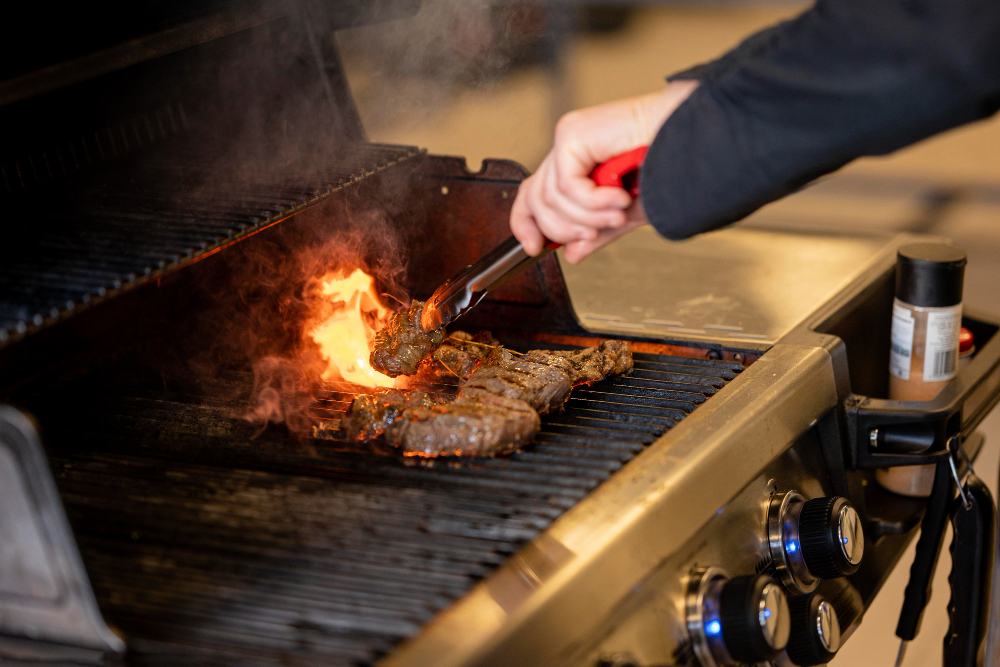
There are countries where food is sustenance, countries where food is culture, and countries where food is religion. Argentina is firmly in the third category, and the deity is fire — the low, patient, wood-fed fire of the parrilla, over which beef of extraordinary quality is cooked with a slowness that makes “grilling” feel insufficient. What is happening is the application of a philosophy: the finest animal, raised on the finest grass, requires nothing from the cook except heat, time, and the restraint not to interfere. The result arrives at the table as the most complete argument for simplicity in cooking that exists in any food culture on earth.
The Asado: A Ceremony That Happens to Involve Eating
The Argentine asado is not, at its heart, about the food. It is about the time before the food — the hour or two that the asador (the person tending the fire, a role that carries genuine social weight and is never undertaken lightly) spends building the fire from wood, reducing it to embers, distributing the embers under the grill with a precision that controls the heat across different zones, and then laying the meat — tira de asado (short ribs), vacío (flank), costilla, morcilla (blood sausage), and whatever else the occasion demands — in the specific arrangement that will cook everything at the right pace. The smell of the wood smoke and the rendering fat rises before anyone has eaten anything, and the anticipation it builds is part of the meal in the same way that the walk to a restaurant is part of the experience of eating in it.
The meat arrives when ready and not before. There are no competing side dishes — perhaps a simple salad, perhaps chimichurri, the vivid green sauce of parsley, garlic, oregano, red wine vinegar, and olive oil that is the only condiment Argentine beef ever needs. You eat slowly, as food cooked slowly deserves to be eaten, and the conversation around an asado — unhurried, generous, running from afternoon into evening — is the social technology the asado was designed to produce.

Empanadas: Small Enough to Eat Standing, Important Enough to Argue About
Every Argentine province has its empanada — the crescent-shaped pastry filled with seasoned meat, cheese, vegetables, or combinations of all three, sealed with a hand-crimped edge whose pattern identifies the filling to the experienced eye the way a wine label identifies the grape. The dough is thin enough to shatter at the first bite and strong enough to contain the juices of the filling without leaking, which is a technical balance that sounds simple and is not. The Tucumán empanada — beef, egg, spring onion, cumin, the dough sealed with the repulgue fold — is considered by many Argentines to be the finest, which is the kind of claim that requires a level of conviction that only people who have eaten empanadas every week since childhood can deploy with a straight face. They deploy it constantly. They may be right.
In Buenos Aires, empanadas are eaten at any hour — quick lunch from a panadería, late-night snack at 1am, starter before the asado begins. They are the punctuation between all other meals, extraordinary in the way very good bread is extraordinary — present everywhere, taken for granted, missed immediately when absent.

Dulce de Leche: The Ingredient That Appears in Everything
Dulce de leche — milk and sugar cooked over low heat for hours until the lactose caramelises into a deeply golden, intensely sweet, slightly smoky paste — is Argentina’s most exported ingredient and still its most loved at home. Spread on bread for breakfast. Filling the medialunas (smaller, sweeter than the French croissant) eaten at café tables across Buenos Aires every morning. Filling the alfajores — crumbly cornstarch cookies dipped in chocolate — bought at every kiosk and supermarket in quantities suggesting the nation has decided the appropriate relationship with dulce de leche is simply permanent.

Argentine food asks very little of the cook and everything of the ingredient. The result is some of the most deeply satisfying eating in the world — which is what happens when you spend two centuries getting very good at one thing and see no reason to stop.
Leave a Reply