
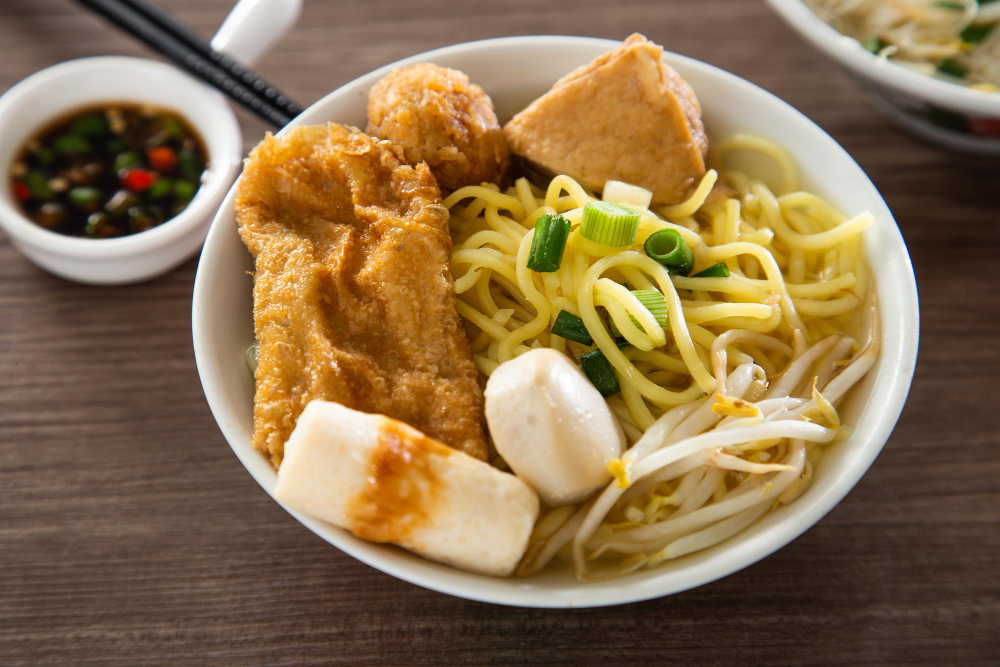
The first time I encountered Burmese food properly was at a tea shop in Yangon at seven in the morning — the kind that has been setting up its plastic tables since five, serving mohinga from a pot that simmered before I arrived and would continue after I left. I ordered without entirely knowing what I was ordering, which is the correct approach to any new food culture. The bowl was fish broth thickened with rice flour and lemongrass, rice noodles, crispy split chickpeas, a boiled egg, lime, coriander, fish sauce to add at the table — a breakfast so complete and so calibrated to the early morning that I ate it in silence and then ordered another, understanding I had not been paying sufficient attention to this part of the world.
Mohinga: The Breakfast That Defines a Nation
Mohinga is Myanmar’s national dish by the overwhelming consensus of the people who eat it every morning across every city and town and village in the country — which is to say, it is the national dish in the truest possible sense, not the dish that appears on tourist menus but the dish that people eat because it is what breakfast means in Myanmar. The broth is made from fish — catfish, traditionally — simmered with lemongrass, ginger, and fish sauce until it is rich and slightly golden, then thickened with rice flour and sometimes banana stem for body. The rice noodles arrive soft in the broth, the crispy split chickpea fritters alongside add texture, the hard-boiled egg provides protein, and the fresh herbs and lime at the table provide the brightness that lifts the whole bowl into something that manages to be simultaneously delicate and deeply sustaining. It is the most complete breakfast in Asia. I would argue this point at length with anyone prepared to make the comparison seriously.

Laphet: The Salad That Is Also a Philosophy
Laphet thoke — pickled tea leaf salad — is the dish that most completely expresses what Burmese food culture values. Fermented tea leaves, tossed with crispy fried garlic, roasted sesame seeds, fried broad beans, dried shrimp, sliced tomatoes, green chilli, and lime juice: each ingredient contributing its own texture and flavour to a combination that is simultaneously crunchy and soft, sour and savoury and slightly bitter, with the fermented tea providing a depth that has no equivalent in any other cuisine. It is eaten as a snack, as a palate cleanser between dishes, as an offering at social gatherings — the laphet set, with the fermented leaves in the centre surrounded by their accompaniments in small dishes, is the Burmese version of sharing food, the thing you put on the table when someone arrives and the thing they remember when they leave.
Laphet itself is unique to Myanmar — fresh tea leaves steamed and fermented in bamboo cylinders buried in earth for months. It tastes of the tea plant rather than the tea drink: earthy, slightly bitter, unlike anything in Chinese or Japanese tea traditions. Understanding laphet is understanding something essential about Burmese food: that fermentation is a flavour philosophy, not just a preservation technique, and that the best flavours come from patience rather than heat.

The Shan Table: Myanmar’s Other Great Food Tradition
Shan State, in Myanmar’s eastern highlands, has its own food culture distinct from the Burman lowland tradition — one built on tofu made from chickpeas rather than soybeans (firmer, more flavourful, eaten fried or in salads), on rice noodles in tomato-based broths of extraordinary freshness, and on the herb gardens that the cool highland climate permits. Shan tofu — golden-fried cubes with a crispy exterior and a soft, slightly nutty interior — is the ingredient that converts anyone who assumed tofu was a compromise food rather than a genuine choice. Shan noodle soup — thinner and lighter than mohinga, its broth tomato-bright and herb-fragrant — is the lunch that Shan State has been making correctly for centuries and that the rest of Myanmar has been appreciating accordingly.

Burmese food has been cooking at the crossroads of three great culinary civilisations for centuries and has produced something entirely its own. The rest of the world is only beginning to notice. This is a window. Use it while it is open.
Leave a Reply