
I arrived in Kathmandu on a Tuesday afternoon and spent the first hour convinced that the taxi driver was attempting to lose me in the traffic, which turned out not to be true — the traffic in Kathmandu simply is that way, a dense negotiation of motorcycles and tuk-tuks and pedestrians and the occasional cow conducted through streets that were not built for any of them but that have accommodated all of them for centuries through a system of mutual adjustment that visitors find alarming and residents find entirely ordinary. By the time we reached Thamel I had adjusted my expectations, which is the first and most useful thing Kathmandu asks of every visitor: arrive without assumptions about pace, and the city will reward you at a pace entirely its own. Arrive with assumptions, and the city will spend the first day correcting them.

Boudhanath: The Stupa That Stops You Still
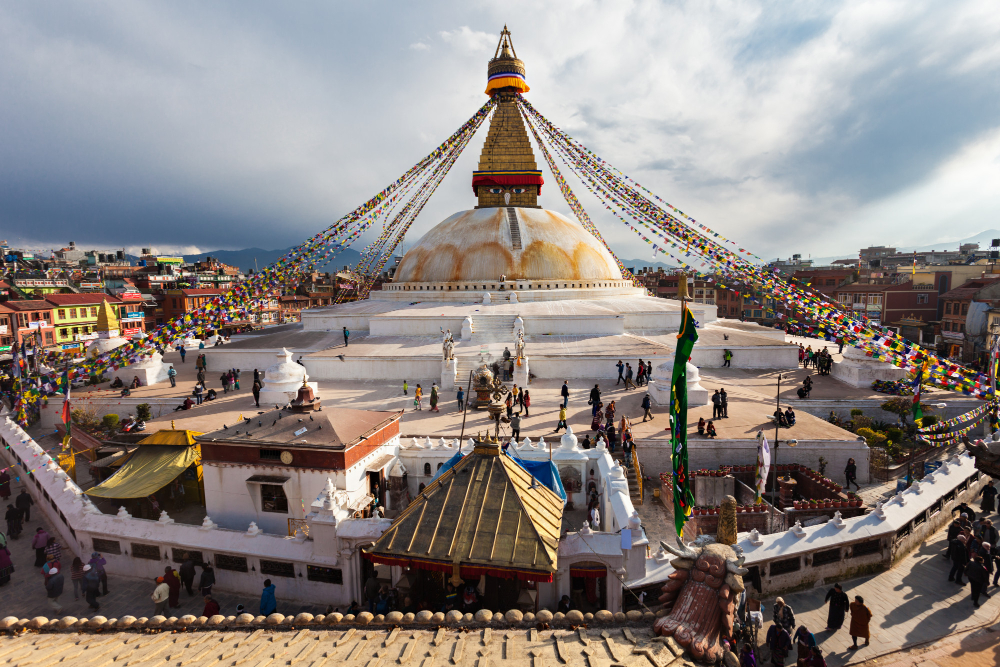
Boudhanath stupa sits in a neighbourhood of Tibetan Buddhist monasteries in the northeast of Kathmandu, and arriving at it for the first time — turning a corner off a narrow lane and finding the enormous white dome suddenly present at human scale, far larger than any photograph prepared you for, the painted eyes above the gilded tower looking out at the four cardinal directions with a patience suggesting they have been doing this since the 5th century, which they have — produces the specific stillness of encountering something that was not built to impress but has become impressive through sheer duration of presence. The kora — the circumambulation of the stupa in a clockwise direction, the pilgrims turning their prayer wheels and murmuring mantras as they walk — is conducted at all hours. Join it at dawn, when the morning light catches the prayer flags strung from the tower and the monks are going about their morning routines in the surrounding monasteries, and the stupa gives you something that the rest of Kathmandu, for all its energy, does not.

Pashupatinath: Where Kathmandu Confronts the Infinite
Pashupatinath is Nepal’s most sacred Hindu temple, situated on the banks of the Bagmati River, and visiting it requires the same preparation that Varanasi requires — the willingness to encounter death as a public, practised, unremarkable fact rather than something conducted behind closed doors. The cremation ghats on the river are active. The sadhus who sit on the temple steps have given up everything except the ash on their bodies and the trident in their hands and the particular stillness of people who have stopped needing anything. The temple complex itself is closed to non-Hindus, but the surrounding ghats and the hillside opposite — where you can sit and watch the river and the ceremonies and the city behind with the Himalayan peaks visible on clear days above the valley rim — offer more than enough context for understanding what this place means and why people come from across the subcontinent to be here.

The Momos: The Food That Holds the City Together
If Kathmandu has a single dish crossing every caste and every hour, it is the momo — steamed or fried dumplings with spiced meat or vegetables, served with hot tomato-chilli achar. Dal bhat — lentil soup and rice, the national meal — is what the momos lead you toward: so nourishing that Nepali porters eat it twice a day while carrying forty kilograms up a mountain. The most compelling nutritional endorsement any dish has ever received.
Kathmandu will disorient you, feed you, show you things you were not expecting to see, and send you away understanding the Himalayas before you have even seen them. That is what a gateway city does when it takes its role seriously.
Leave a Reply