
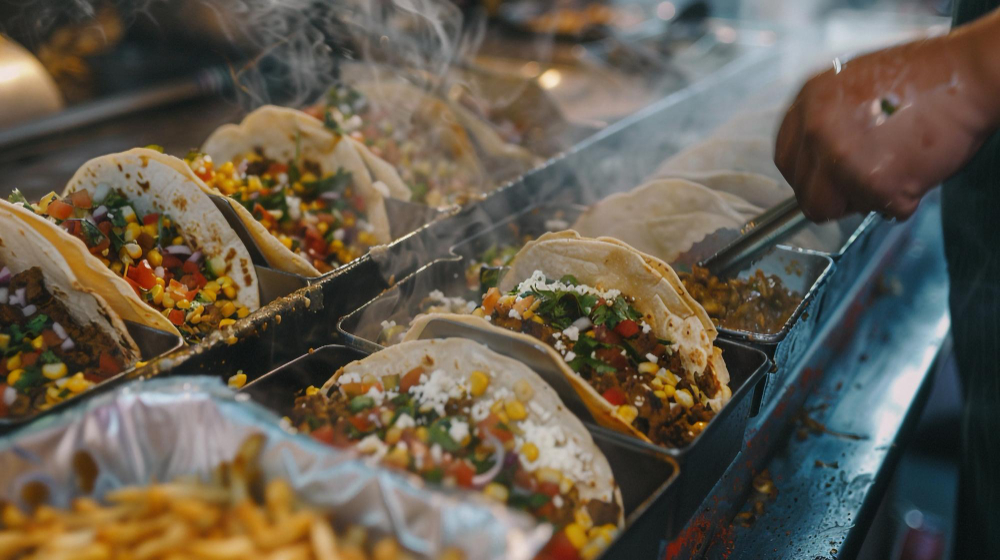
Trinidad is a small island of 1.4 million people at the southern end of the Caribbean, eleven kilometres from Venezuela, and its food culture is the most accurate edible map of colonial history I have ever encountered — the African base that survived the Middle Passage, the Indian indentured labour that arrived after emancipation and brought with them the roti and the doubles and the curry techniques that now define the island’s street food, the Chinese and Spanish and French and Lebanese communities that each left their marks in the seasoning and the technique and the specific dishes that exist nowhere else in the world in quite this combination. Trinidadian food does not smooth these histories into something comfortable. It holds them together in the same pot and produces something that is simultaneously all of its influences and entirely its own — which is a description of the island itself, and the food is honest about that in a way that makes eating it feel like reading a very good history.

Doubles: The Breakfast That Defines the Island
I ate my first doubles at a roadside stall in Port of Spain at six-thirty in the morning, standing up, eating a second before I had finished the first, understanding immediately why the doubles vendor at the corner of that particular junction had a queue before the city had fully woken up. Doubles are two bara — small, soft, slightly chewy fried flat breads made from flour and turmeric — filled with curried channa (chickpeas cooked down with shadow beni and geera and other seasonings until the individual chickpeas have given up their edges to the sauce) and topped at the vendor’s stall with a selection of chutneys and pepper sauce that ranges from mango to tamarind to the green chado beni sauce that is one of the finest condiments in the Caribbean. The whole thing costs less than a dollar. It is consumed in under two minutes. It is the most complete breakfast available on the island and the thing that Trinidadians living abroad miss with an intensity that no other food produces in quite the same way.

Roti: The Indian Inheritance That Became Something New
The roti of Trinidad is not the roti of India — it is what happened when Indian indenture workers who came to Trinidad between 1845 and 1917 adapted their bread tradition to the ingredients and the cooking conditions of the Caribbean and produced something that is neither purely Indian nor purely Caribbean but is entirely Trinidadian. The dhalpouri roti — dough rolled out and filled with ground split peas before being cooked on the tawa, the whole thing soft and slightly smoky — is the version used as a wrap for curry, folded around curried chicken or goat or potato in a combination so satisfying and so specific that eating a roti wrap in Trinidad and eating one anywhere else in the world are genuinely different experiences. The curry inside has a character shaped by shadow beni (broad-leaf thyme), geera (cumin), and the particular green seasoning that Trinidad uses as a base for nearly everything — a combination of herbs and aromatics that belongs to the island in the same way that basil belongs to Italy.

Pelau and the Sunday Table
Pelau — rice cooked in burnt sugar with chicken, pigeon peas, coconut milk, and whatever vegetables and herbs the cook decides — is the one-pot Sunday dish that every Trinidadian family makes and that every Trinidadian has strong opinions about the correct way to make. The burnt sugar base, caramelised until it is almost black and slightly bitter before the chicken is added to coat in it, gives the dish a depth and a colour that no other method produces — the rice comes out a deep, glossy brown that looks like it took considerably longer than it did, and the flavour has the specific sweetness and bitterness of caramel that has been handled correctly. It is made in large quantities. It is eaten at Sunday gatherings. It is the food that Trinidad uses to mark the day that belongs to family, and the mark it leaves is indelible.
Trinidadian food is a history lesson you eat standing up at a roadside stall for one dollar. It tastes of everything the island survived and everything it made from the survival. That is not a small thing to taste.
Leave a Reply