
The Basque Country — the coastal region straddling the border between northern Spain and southwestern France, centred on San Sebastián, Bilbao, and Biarritz — has more Michelin-starred restaurants per capita than any other region on earth. That fact alone should tell you something. But the number of stars is almost beside the point, because what makes Basque food extraordinary is not what happens in the fine dining restaurants; it is what happens in the pintxo bars, the cider houses, the fishing port restaurants serving whole grilled turbot to people who eat it with a concentration that suggests they are aware of how good it is. Basque cuisine is built on the Atlantic — the fish and seafood of the Bay of Biscay, the anchovies of Getaria, the salt cod that the Basque fishermen were salting and trading before Columbus sailed anywhere — and on the vegetables of the interior valleys and the lamb and beef of the Pyrenean foothills. It has its own gastronomic societies, the txokos, where groups of (historically male) members cook elaborate meals for each other as a form of cultural practice rather than mere eating. It has produced more influential chefs — Juan Mari Arzak, Martín Berasategui, Andoni Luis Aduriz, the late Santi Santamaria — than any region of comparable size in the world. And it has the pintxo, which is its own argument entirely and which we will get to.
Pintxos: The Bar Food That Has No Equal Anywhere
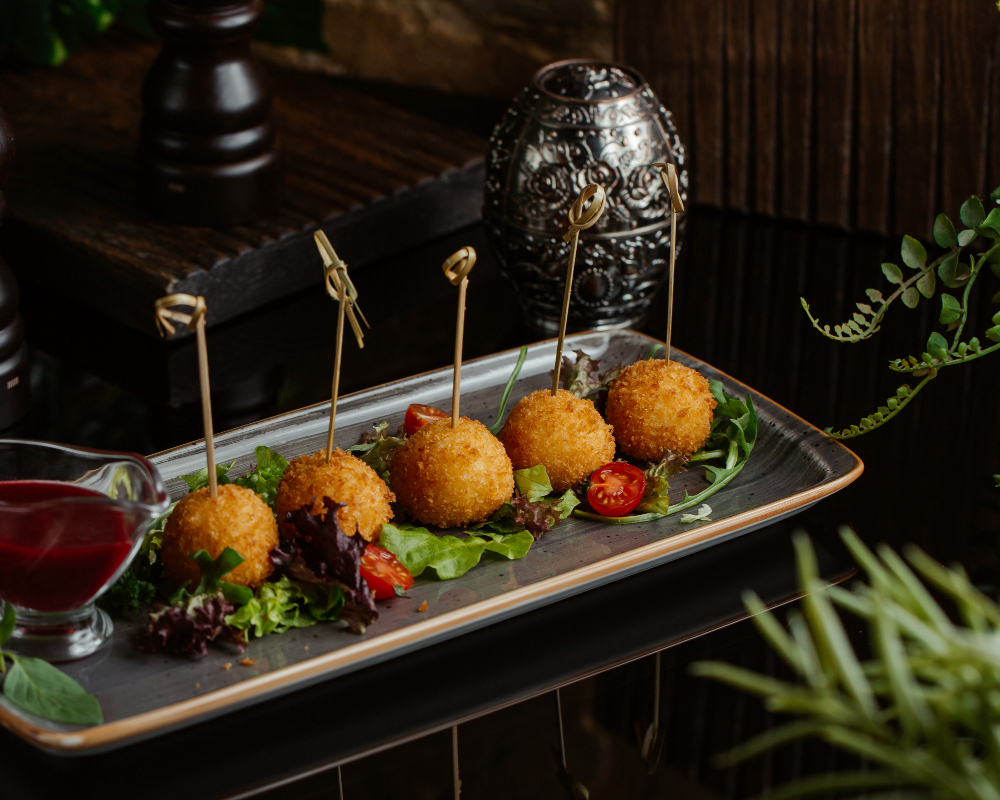
A pintxo (pronounced peen-cho) is a small portion of food, typically served on a slice of bread and held together with a toothpick — the word pintxo means spike in Basque — and it is the cornerstone of Basque social eating. The comparison to Spanish tapas is inevitable and unhelpful, because pintxos are a fundamentally different proposition: more elaborate, more technically accomplished, more specific in their flavour combinations, and arranged along the counters of the bars of San Sebastián’s Parte Vieja (Old Town) in a display so dense and colourful and well-composed that walking into a pintxo bar for the first time produces a specific kind of paralysis, the kind that comes from not knowing where to start. The classics are the classics for a reason: anchoa y pimiento (anchovy from the Cantabrian Sea, roasted red pepper, the oil from both combining on the bread beneath), tortilla de patata in a thick slice, gamba al ajillo (prawns in garlic oil), txangurro (stuffed spider crab), morcilla with quail egg. But the creative pintxos — the ones that change daily and represent the bar’s own invention — are where the real interest lies, because a good pintxo bar in San Sebastián operates at a level of technical skill and flavour thinking that is indistinguishable from serious restaurant cooking, just compressed into two bites and priced at about two euros. The protocol: you walk the bar, you take what you want from the counter or order the hot pintxos directly, you keep your toothpicks, and at the end the barman counts them and charges accordingly. You drink txakoli — the slightly sparkling, bone-dry local white wine — poured from a height into a wide glass to aerate it. You move to the next bar. You do this for three hours.

The Fish: Why the Bay of Biscay Changes Everything
The Basques were fishing the waters of the Bay of Biscay, the North Atlantic, and the Grand Banks of Newfoundland centuries before those voyages were considered historically significant, and the quality of the seafood that those fishing traditions secured for Basque cuisine is the foundation on which everything else is built. Bacalao — salt cod — is the historical staple: the fish that the Basque fleet caught, salted at sea, and brought back to a region that, before refrigeration, needed preserved protein. Basque salt cod cooking has produced some of the most sophisticated seafood preparations in European cuisine: bacalao al pil-pil, in which the cod is confited in olive oil over very low heat and the gelatine from the fish skin emulsifies with the oil into a thick, trembling sauce without a drop of cream or thickener; bacalao a la vizcaína, in which the fish is cooked in a sauce of dried choricero peppers, onions, and tomatoes that is unique to Bizkaia province and has been cooked the same way for at least two hundred years. Beyond bacalao, the fresh fish of the Cantabrian coast — the anchovies of Getaria, the bonito tuna of the summer season, the merluza (hake) that is the everyday fish of every Basque home, the kokotxas (the gelatinous cheek and chin of the hake, prized above the rest of the fish and cooked in the same pil-pil method as the bacalao) — are treated with a simplicity and a seriousness that reflects how much the Basques understand about the quality of what they are working with. The fishing port restaurants of Getaria, where whole turbot is grilled over charcoal on an open grill facing the sea, are among the most honest and pleasurable places to eat fish anywhere in the world.

San Sebastián: The City That Eats Better Than Anywhere
San Sebastián — Donostia in Basque — is a city of 180,000 people on the Bay of Biscay with a curved beach, a beautiful old town, and a concentration of culinary excellence that no city of its size anywhere in the world can match. The Michelin-starred restaurants — Arzak (three stars, held since 1989, the founding institution of modern Basque cuisine), Mugaritz (two stars, Andoni Luis Aduriz’s laboratory of gastronomic ideas), Martín Berasategui (three stars, outside the city in Lasarte-Oria) — represent one layer of what San Sebastián is. But the city’s deeper food identity is in the Parte Vieja bars, which operate according to a social logic that has nothing to do with restaurant dining: you eat standing up, you drink txakoli or local cider or a glass of wine, you move between bars, and the entire experience is conducted at a pace and with a noise level that reflects the Basque understanding that eating is primarily a social act conducted between people who know how to do it. La Cuchara de San Telmo, Bar Txepetxa (which does nothing but anchovies, in seventeen different preparations, and does not need to do anything else), Gandarias, Bar Borda Berri — the names recur in every conversation about the Parte Vieja and they recur because they are consistently, reliably excellent. The market, La Bretxa, is where the ingredients that supply both the restaurants and the home kitchens of San Sebastián are sold: the produce stalls piled with pimientos de Gernika and white asparagus and the wild mushrooms of the surrounding forests, the fish stalls with the morning’s catch from the port, the charcuterie counters with the cured meats of the Basque interior. The market tells you everything about why the food in San Sebastián is what it is.

The Cider Houses and What They Mean
From January to April each year, the sagardotegiak — the Basque cider houses — open in the hills above San Sebastián and Bilbao for the txotx season, when the new cider is ready to be drawn from the barrel and tasted. The ritual is fixed and has been fixed for generations: the sagardotegi charges a set price that covers the meal and unlimited cider, and the meal is the same in every cider house, because it has always been the same and there is no reason to change it. It begins with salt cod omelette — a thick, barely set tortilla made with the bacalao that was the winter staple of the cider house workers. Then salt cod with peppers and onions. Then a txuleta — a large, heavily marbled chop from a retired dairy cow, aged for weeks, cooked over charcoal with nothing but salt, and served rare, because the quality of the meat is such that it needs and wants nothing else. Then aged Idiazabal cheese with quince paste and walnuts. And throughout, the cider: when the sagardote shouts txotx and opens the tap on a barrel, the diners surge toward it with their glasses, holding them low at an angle to catch the thin stream of cider falling from height, drinking directly from the barrel, moving to the next barrel when it opens. The cider is dry, cloudy, slightly funky, and nothing like the sweet cider most of the world knows. It is the original Basque drink — older than txakoli, older than wine in this region — and the ritual around it is a social institution as serious and specific as any in European food culture. Go between January and April. Book in advance. Wear clothes you don’t mind getting cider on.
Basque food is the food of a people who have been thinking very seriously about eating for a very long time, in a place that gives them extraordinary ingredients to think with. The pintxo bar is where you start. The txuleta from the cider house is where you understand. And the bacalao al pil-pil, trembling in its own emulsified oil, is where you stop needing any further explanation of why this is one of the great food cultures on earth.
Leave a Reply