
The international image of Nairobi is complicated and largely outdated, constructed from a combination of outdated security advisories, journalistic shorthand about East African instability, and the tendency of the travel industry to route Kenya visitors through the capital as quickly as possible on the way to the Maasai Mara or Mount Kenya or the Kenyan coast. This is a failure of imagination and a failure of research. Nairobi is a city of 5 million people (greater metro area approaching 8 million) that has, in the last fifteen years, developed into the most interesting and most functional capital city in East Africa: a genuine tech hub (the Silicon Savannah, centred on the Westlands and Kilimani districts, produces more African tech startups per capita than any city on the continent), a food and café culture that is the best in the region and improving rapidly, a creative arts and music scene that has been producing globally significant work for a decade, and — uniquely among the world’s major cities — a national park on its southern edge where lions and giraffes and buffalo graze with the city’s skyscrapers visible on the horizon behind them. The Nairobi National Park safari, the Giraffe Centre, the Karen Blixen Museum, the David Sheldrick Wildlife Trust elephant orphanage — these are not consolation prizes for travellers who wish they were already at the Mara. They are, in their own right, extraordinary. The city around them is also extraordinary. Nairobi rewards the traveller who gives it two or three days rather than a single night transit, and it rewards them more completely than most African capitals can.

Nairobi National Park: The Safari That Starts 7 Kilometres from the City Centre
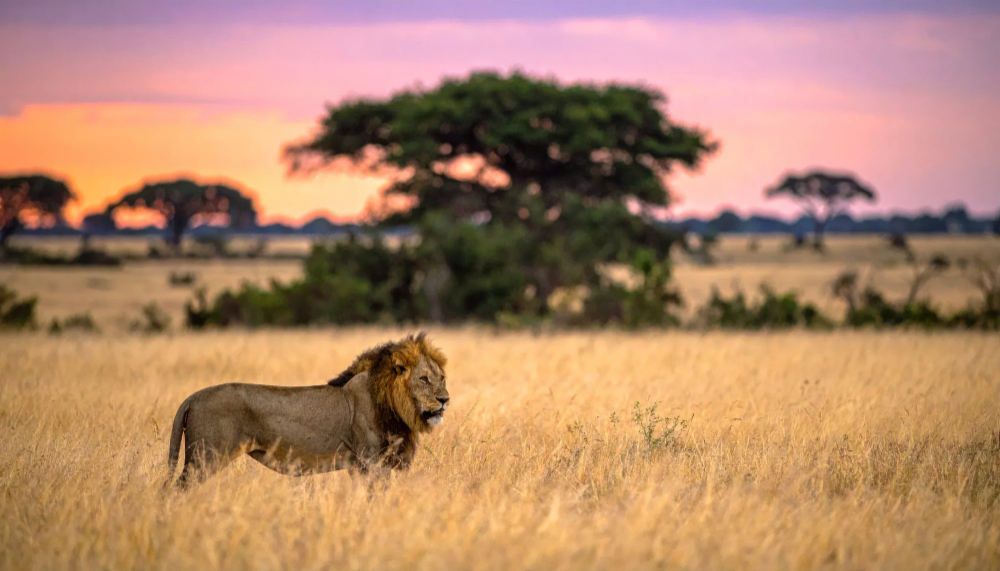
Nairobi National Park is the most improbable wildlife destination in Africa and possibly in the world: a 117-square-kilometre national park 7 kilometres from the centre of a city of 5 million people, whose unfenced southern boundary allows wildlife to migrate freely between the park and the Athi-Kapiti plains beyond, and whose northern edge runs along the flight path of Jomo Kenyatta International Airport. Within the park — which requires a 4WD to navigate properly and can be entered by taxi or tour vehicle from the main gate off Langata Road — lions, leopards, cheetahs, rhinos (the black rhino population in the park is one of the most protected in Kenya), buffalo, hippos, giraffes, zebras, and more than 400 species of birds are resident or regularly present. The game viewing is not the Mara in the dry season, when the concentration of wildlife at the river crossings is something the park cannot match. But the park provides something the Mara cannot: the surreal and entirely real experience of watching a lion sleep under an acacia tree with the Nairobi CBD’s office towers visible on the horizon five kilometres behind it. Morning game drives (departing before 7am, when the park is at its most active and the light is at its most photographic) are the correct way to use the park, and the park is well-managed enough that self-drive is possible with a reliable 4WD and some knowledge of the road network. The Nairobi National Park is also the location of the Kenya Wildlife Service headquarters and provides conservation context that the more remote parks cannot offer: the evidence of what a national park does when it is embedded in an urban area and depends on urban political will for its continued existence is here, in the form of a functioning ecosystem on the southern edge of a megacity.

The Giraffe Centre, Sheldrick Elephants, and Karen
The African Fund for Endangered Wildlife’s Giraffe Centre in Langata is the wildlife experience that Nairobi does better than anywhere in Africa: a centre where Rothschild giraffes — one of the most endangered giraffe subspecies in the world, with fewer than 1,600 remaining in the wild — are bred and habituated to human presence in a setting where visitors stand on a raised platform at giraffe-face level and feed them pellets by hand, the giraffe’s 45-centimetre blue-black tongue wrapping around the pellet and the fingers holding it in a moment of contact with one of the most extraordinary animals on earth. The Giraffe Centre is also a serious conservation organisation — the breeding programme has reintroduced Rothschild giraffes to several Kenyan national parks — and the combination of the educational programme with the encounter experience makes it significantly more than a tourist attraction. The David Sheldrick Wildlife Trust’s elephant orphanage, in the Nairobi National Park, runs daily public visiting hours (11am, for one hour) during which the orphaned elephant calves that the Trust has rescued from across Kenya are brought out to their mud bath, observed by visitors from a rope barrier at a distance of a few metres. The calves — some as young as a few weeks old, still dependent on their keepers — interact with each other with the intelligence and the emotional expressiveness that make elephants the most cognitively complex land animals after humans, and the experience of watching them at close range is one of those wildlife moments that stays with a person for a very long time. The Karen district — named for Karen Blixen, the Danish author of Out of Africa, whose farm (now the Karen Blixen Museum) is the centre of a leafy, colonial-era suburb — is where both the Giraffe Centre and the Sheldrick Trust are located, and spending a full day in Karen, combining both wildlife experiences with lunch at one of the suburb’s restaurants, is the most rewarding single day available to a Nairobi visitor.

The Food, the Café Scene, and the Nairobi That the Transit Traveller Misses
Nairobi’s food scene has transformed since approximately 2010, driven by the growth of the tech sector and the return of Kenyan professionals from London and New York and Dubai who came back with expectations about coffee and food that the existing Nairobi restaurant landscape could not meet — and then proceeded to open the establishments that could meet them. The result is a café and restaurant culture in the Westlands, Kilimani, and Karen districts that is the best in East Africa and genuinely competitive with the better neighbourhood restaurant scenes of European cities: specialty coffee roasted in Kenya from single-origin beans grown on the slopes of Mount Kenya (Kenyan coffee is among the finest in the world, and the specialty coffee available in Nairobi’s better cafés is the same coffee that European specialty roasters pay premium prices to import); restaurants producing contemporary Kenyan food that uses the nyama choma (charcoal-roasted meat tradition of the Kenyan interior), the coastal Swahili flavours of mombasa coconut and tamarind, and the Indian Ocean seafood in formats that reflect a sophisticated urban dining culture; and the Ethiopian and Somali restaurants of the Eastleigh district that serve the most authentic versions of these cuisines available outside their countries of origin. Nairobi’s street food — the mutura (the Kenyan grilled sausage made from offal and blood), the nyama choma eaten at the outdoor roasting stands of the Westlands, the mandazi and the chai of the morning markets — is the food culture that predates the specialty coffee scene and remains the most genuinely Nairobian. Karura Forest, on the northern edge of the Westlands, is the urban forest that provides what the national park provides at a different scale: a 1,000-hectare indigenous forest with cycling and running trails, waterfalls, and monkeys in the canopy, accessible from the city centre and free to members of its conservation trust.
Nairobi is not the easiest city to navigate without planning — the traffic is genuinely difficult, the city is spread across a large area, and moving between the national park and Karen and Westlands and the city centre requires either a reliable taxi arrangement or the app-based ride services (Bolt and Uber both operate extensively in Nairobi) that have made the city significantly more navigable in the last five years. But the planning required is modest compared to what the city returns: two days that include a morning game drive in the national park, an afternoon at the Giraffe Centre and the Sheldrick Trust, one lunch and one dinner in Westlands or Kilimani, and a morning at the Karen Blixen Museum constitute a Nairobi experience that is more interesting, more varied, and more genuinely African than the transit lounge and the overnight hotel that most Kenya visitors allocate to the city. The Mara will be there, and it is extraordinary, and you should go. But give Nairobi two days first. It has earned them.
Leave a Reply